Feature
As new tools transform how we make and create, it’s essential to consider the ways in which this can impact people, communities and cultures in unexpected ways. How does AI depict us? And why does it struggle with under-represented communities and minority groups? And how are brands responding to these questions? These were some of the themes unpacked as part of this panel with a panel of experts working across the creative industries.
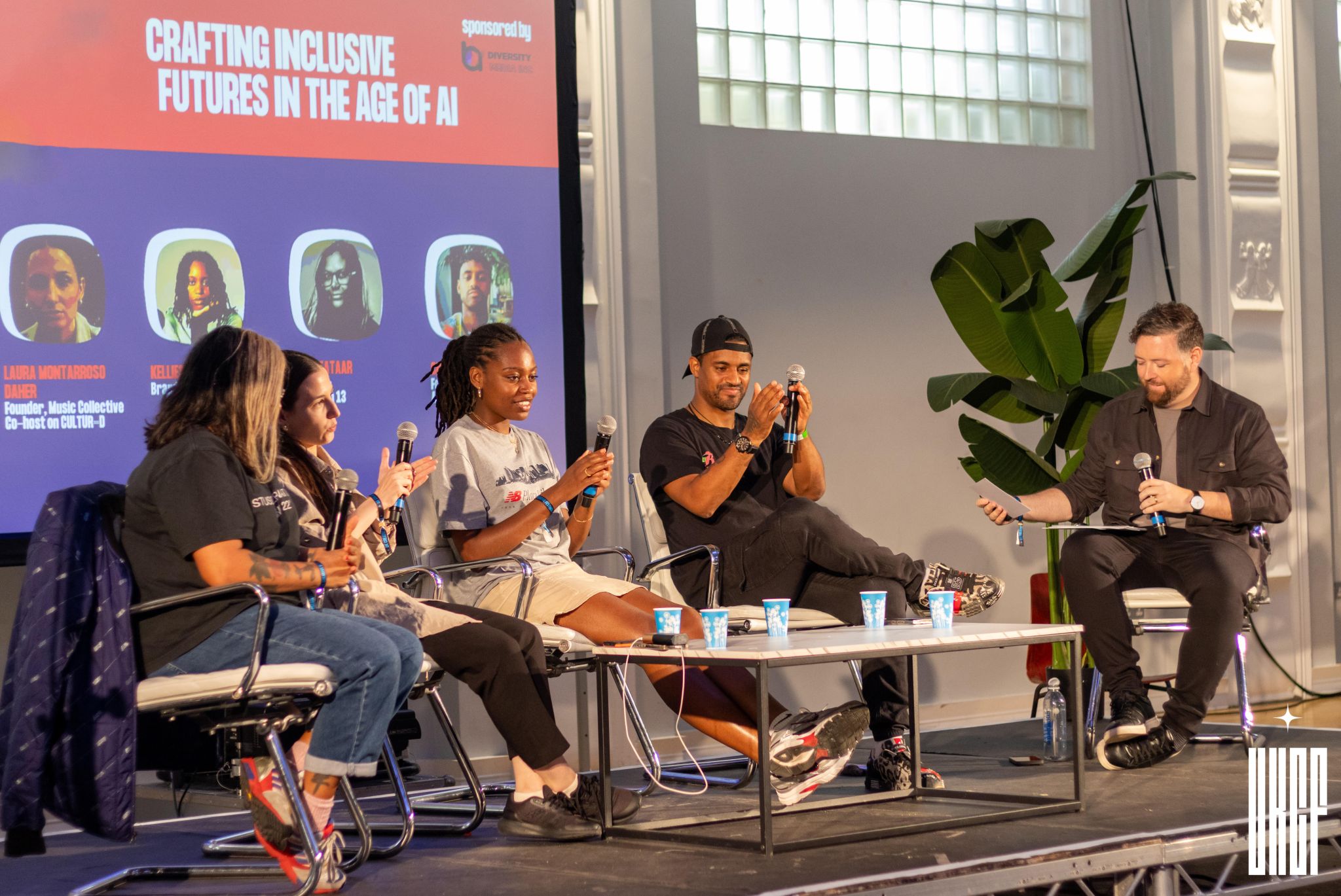
The panel took place the UK Creative Festival 2024, and featured:
Leila Fataar, a renowned brand builder and business innovator, who has over two decades of senior leadership experience at the intersection of culture, creativity and commerce.
Laura Montorrosso Daher, who is founder and driving force of Music Collective, a full service music and sound agency rooted in culture.
Kelliesha White, an award-winning marketer and keynote speaker working to broaden cultural perspectives in marketing and advertising.
Chris Kenna, CEO & AI Entrepreneur, and former advisor to the V&A and Metropolitan Police.
Key insights from our discussion
👁 We know that gen AI draws from widely available sources online, so it’s not surprising that its depictions of under-represented communities can be problematic stereotypes. It is a mirror of existing biases and stereotypes in visual culture.
🔮 It is predicted that by 2026, 90% of new online content will be AI-generated. This will have a profound impact on the meaning of human-made creative outputs, and requires us to reflect on the importance of human creativity, authenticity, and craft in how we approach creative problem-solving. Creatives need to adapt while retaining a critical mindset.
💬 Some brands have explored the role generative AI can play in depicting people and communities, such as DOVE, Inc., Absolut, and Levi’s - seeing a mix of positive feedback and negative backlash.
🤝 Using these tools to depict minority groups and cultures without human input can lead to misrepresentation, creating exposure for brands.
❌ There is a clear risk that by using generative AI to depict people from under-represented communities, opportunities can be taken from real-life artists or models from those communities.
💡 To ensure we’re addressing the impact of generative AI in this space, a concerted effort across government, the private sector, and individual practitioners can help us take full advantage of these tools while avoiding the pitfalls of new technology for minority groups.

Find out more
The full panel discussion can be found here. If you'd like to discuss any of the points raised during the panel, don't hesitate to reach out.